Did we see you at an event over the summer and give you some seeds to bring home to Do well in your local space?
Whether its your garden, planter, a verge or outside your workplace, planting diverse mixes of plants can help make space for nature.
In your seed packet you will have received a sample of Emorsgate EMF2 Standard General Purpose Wildflowers, with some extra cornflowers.
Except for cornflower this mixture contains perennial species that are characteristic of traditional meadows and include:
Achillea millefolium – Yarrow
Betonica officinalis – Betony
Centaurea nigra – Common Knapweed
Daucus carota – Wild Carrot
Galium album – Hedge Bedstraw
Galium verum – Lady’s Bedstraw
Geranium pratense – Meadow Crane’s-bill
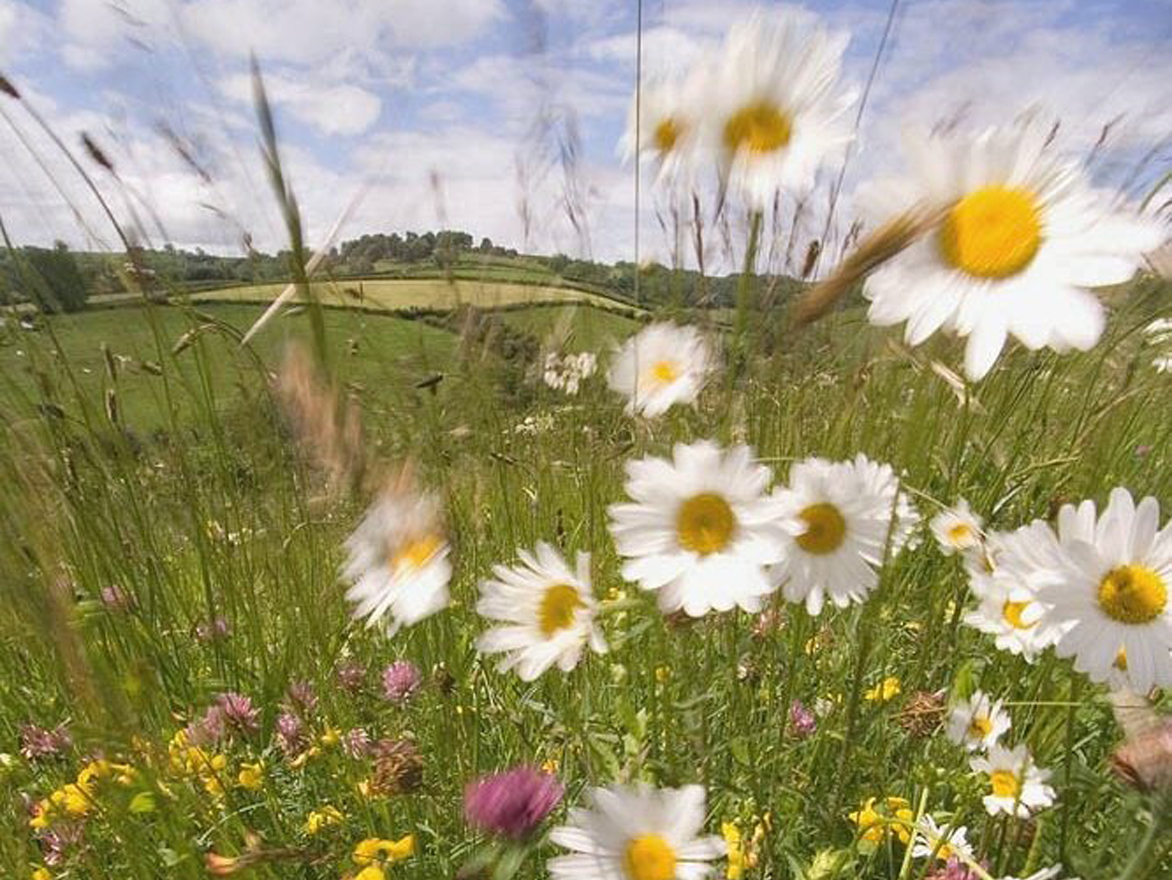
Leucanthemum vulgare – Oxeye Daisy
Primula veris – Cowslip
Prunella vulgaris – Selfheal
Ranunculus acris – Meadow Buttercup
Silene dioica – Red Campion
Silene vulgaris – Bladder Campion
Vicia cracca – Tufted Vetch
Centaurea cyanus – Cornflower
How to Create a Small Wildflower Patch at Home
These steps are adapted for home gardens, lawns, allotments, and veg patches.
- Choose the Right Spot
Wildflowers do best in:
- Areas with poorer soil rather than rich composted soil
Find a metre square patch of garden that you are happy to turn into a little wildflower patch.
- Prepare the Ground
Best done in late summer before autumn sowing. Best done in spring/summer when the soils are warm. In periods of dry weather you will need to water the sown area.
What to do
- Create patches of bare soil
- If sowing into a lawn you should cut the area very short then Rake hard with a metal rake or scarifier to create some loose soil
- Aim for about half grass and half exposed soil.
- Remove tough weeds
- Dig out perennial weeds such as docks, thistles, or brambles.
The seeds need contact with soil to germinate, so bare patches are important.
- Sow the Seed
Best times: Best done in spring/summer when the soils are warm. In periods of dry weather you will need to water the sown area.
How to sow
- Scatter the seed by hand over the prepared area.
- Do not bury the seed — wildflower seed should stay on the surface.
- Gently press the seed down by walking over it or patting lightly if needed, or running a roller over it.
Avoid covering with compost or topsoil.
- Caring for your flowers.
When your cornflowers have finished flowering, cut them using shears to allow your perennial flowers room to continue growing – they will flower next year!
Helpful Tips
- Avoid fertiliser – rich soil encourages grass, not flowers.
- Removing grass cuttings every time is important.
- Be patient: wildflower meadows improve over several years.
- Small patches work well even in ordinary gardens.
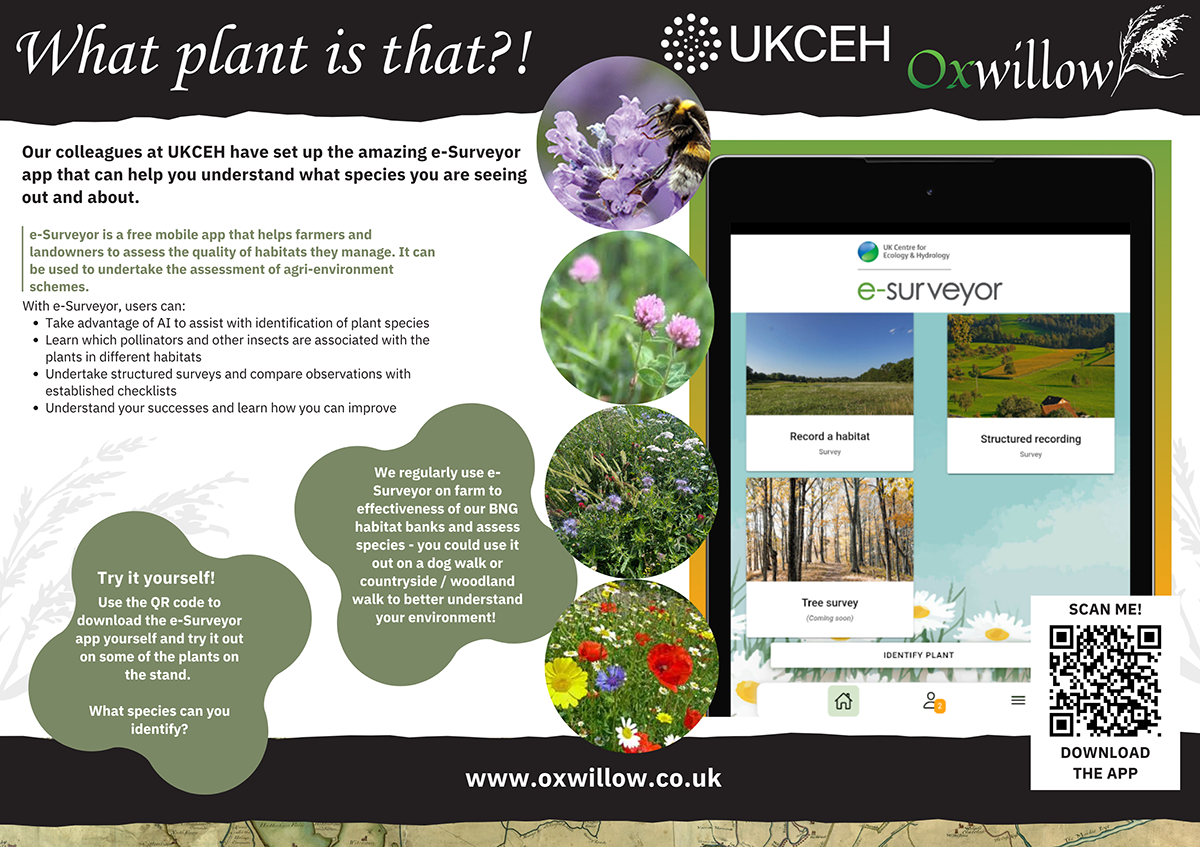
When your wildflowers have grown – why not use the UKCEH e-Surveyor app to see what flourished and send us photos to @weareoxwillow on Instagram or hello@oxwillow.co.uk to show off your #minimeadow!