
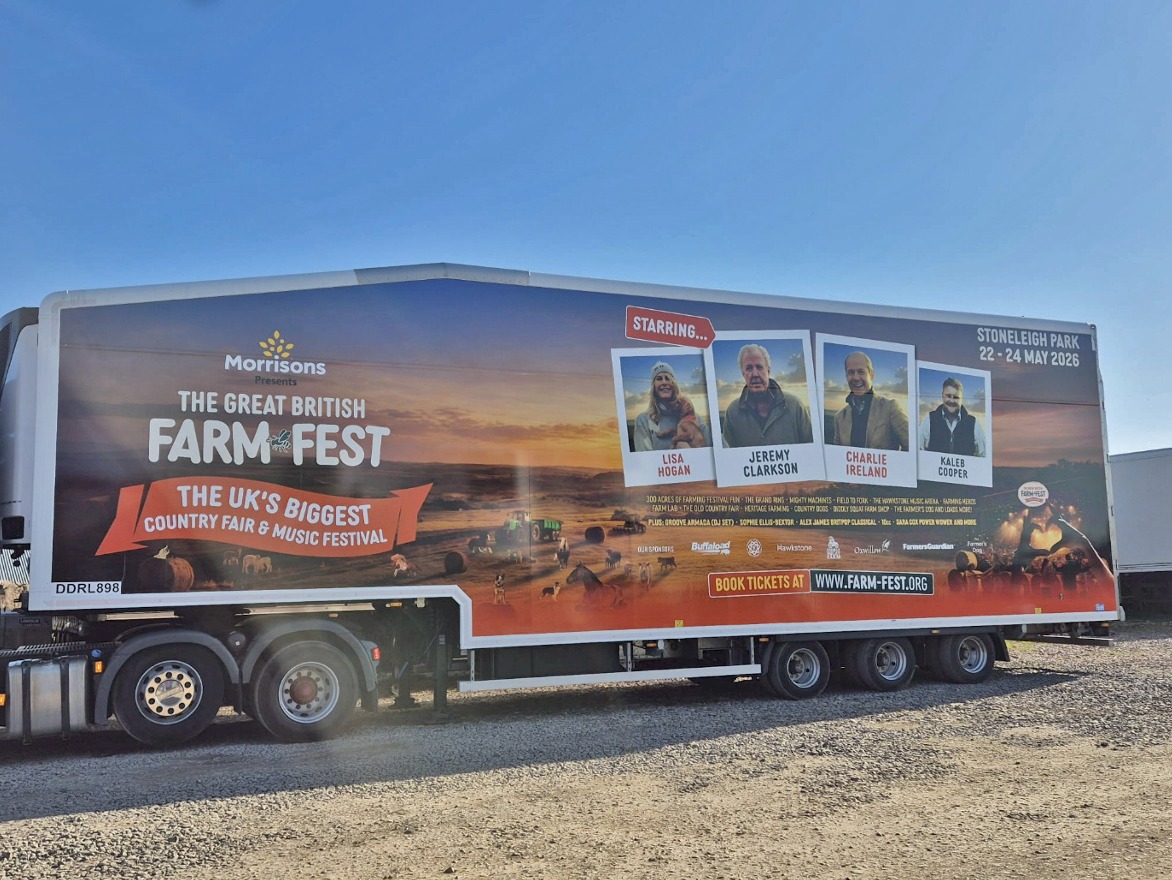
This summer, Oxwillow is pleased to be the official sustainability partner of Farm Fest, a rural gathering that blends music, farming culture, and a refreshingly practical approach to sustainability.
For those unfamiliar, Farm Fest is not your typical countryside festival. Yes, there is live music. Yes, there are tractors parked next to stages (a pairing that initially sounds odd but becomes entirely logical after about ten minutes). More importantly, the event brings together farmers, rural businesses, and the public, who understand that sustainability is not an abstract concept. It’s something that either works, or doesn’t, in real fields, real supply chains, and real businesses.
Why Farm Fest Matters
Agriculture sits at the centre of many of today’s sustainability debates: climate, land use, food security, biodiversity, and the resilience of rural economies. Yet much of the conversation about these topics happens a long way from farms themselves, often in conference centres, policy briefings, or strategy presentations with very tidy diagrams.
Events like Farm Fest offer something slightly different. They bring together the people working within food systems with those trying to understand and improve them. Farmers, suppliers, businesses, and sustainability practitioners share the same space and, quite often, discover they are grappling with the same questions.
It turns out the distance between policy and practice can shrink quite quickly when people are standing in the same field. Which is precisely why we are involved.
Turning Conversation into Action
As the event’s sustainability partner, Oxwillow will support Farm Fest in two main ways.
First, we’re working with the Farm Fest team to understand the event’s environmental footprint. Festivals are surprisingly complex operations, energy use, waste, transport, food supply chains, and like any system, they benefit from clear data and thoughtful design.
Second, we’ll be contributing to the sustainability discussions around the event, sharing insights on carbon management, food systems, and the practical realities of measuring environmental impact.
Not in a lecture-hall sort of way, thankfully. Farm Fest tends to favour conversations over presentations, which usually leads to far more interesting outcomes.
Alongside the conversations and data, there is also the slightly more visible end of sustainability in practice: the logistics, and in this case, the marketing. For Farm Fest, a fleet of lorries used as a promotional platform will be wrapped using non-PVC materials and powered entirely by biogas, a small but meaningful shift away from more conventional approaches. It’s the sort of decision that doesn’t tend to make headlines, but quietly reduces impact where it matters, even in the outward-facing elements of an event. Much like the wider ethos of Farm Fest, it’s not about grand gestures or perfect solutions, but about making practical improvements that work in the real world, on real timelines, with real constraints.
Sustainability, Without the Theatre
One of the most refreshing aspects of working with Farm Fest is the shared understanding that sustainability is rarely simple.
It involves trade-offs. It requires decent data. And it benefits enormously from a certain degree of humility, particularly in agriculture, where nature has been running complex systems for quite a long time before sustainability frameworks arrived with spreadsheets.
Our role is not to provide slogans or tidy answers. Instead, it’s to help bring clarity to environmental data and support informed decisions, whether that’s within organisations, supply chains, or, in this case, a festival. Because sustainability works best when it stops being an aspiration and starts becoming part of how things are run.
Looking Ahead
At its heart, Farm Fest is a celebration of rural culture and community. But it also serves as a quiet reminder that agriculture sits at the centre of many of the challenges and opportunities shaping the future of sustainability.
We’re proud to support an event that approaches these issues with curiosity, practicality, and just the right amount of irreverence. After all, serious conversations about the future of food and farming don’t always need to happen in boardrooms. Sometimes they happen in fields, beside tractors, with live music in the background and Hawkstone in hand.
Tom Moxon
Supply Chain Sustainability Lead, Oxwillow